THE JOURNEY OF LANGUAGE: DEVELOPMENT AND STAGES OF EXPRESSION IN CHILDREN


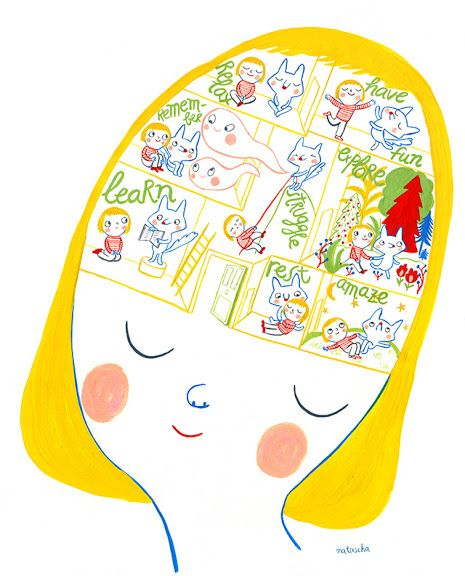
Language development in children is not simply an accumulation of words, but a true transformation of thought. From their very first days, children embark on an invisible journey where their interactions with the world gradually shape their ability to express themselves. This journey, which transforms a simple cry into structured speech, relies on the delicate balance of several fundamental pillars.
It is within this synergy that children find the keys to decode their environment and ultimately make the world their own through the power of language
MAIN STAGES OF LANGUAGE DEVELOPMENT:
- EARLY FORMS OF COMMUNICATION (0 TO 12 MONTHS)
Even before the appearance of the first words, infants are active communicators in what is known as the pre-linguistic stage.
- MEANS OF INTERACTION: From birth, they use crying, sustained eye contact, facial expressions, and body movements to signal their needs.
- VOCALIZATIONS (COOING): Around 2–3 months, the child produces sounds mainly composed of vowels (“ahhh,” “ohhh”). This is a phase of exploring the vocal apparatus and discovering the pleasure of producing sounds.
- COMMUNICATIVE INTENTIONALITY: Around 8–10 months, the child understands that their gestures have an impact. They use pointing to draw an adult’s attention to an object of interest, marking the beginning of conscious social communication.
PHONOLOGY: THE ACQUISITION OF SOUNDS
Phonology refers to the ability to perceive and reproduce the specific sounds of a language.
- LINGUISTIC SPECIALIZATION (6 TO 12 MONTHS): Initially capable of distinguishing all human sounds, the baby begins to focus exclusively on the phonemes of their native language.
- BABBLING (6 TO 9 MONTHS): Characterized by the repetition of syllables (“ba-ba,” “da-da”), babbling helps exercise the articulatory muscles and familiarize the child with the rhythm and intonation of language.
- PROGRESSIVE ACQUISITION: Mastery of sounds follows a biological order: first vowels, then plosive consonants (p, b, t, d), followed by fricatives (f, s, sh), and finally more complex sounds such as “l” and “r.”
LEXICON: VOCABULARY ACQUISITION
The lexicon represents all the words a child understands (receptive vocabulary) and produces (expressive vocabulary).
- FIRST WORDS (AROUND 12 MONTHS): These usually refer to significant people, familiar objects, or basic actions.
- VOCABULARY SPURT (16 TO 18 MONTHS): This is a stage where learning accelerates dramatically. The child realizes that everything in their environment has a name. Their vocabulary can grow from a few dozen to several hundred words in just a few months.
SYNTAX: BUILDING SENTENCES
Syntax is the structure that organizes words to convey complex messages.
- HOLOPHRASE (12 TO 18 MONTHS): The child uses a single word to express a complete idea. For example, “Milk” may mean “I want to drink milk.” Context is essential for adult interpretation.
- TELEGRAPHIC SPEECH (24 TO 30 MONTHS): The first combinations of two or three words appear (“Mommy come,” “More cookie”). The child gradually begins to include grammatical words (pronouns, determiners, prepositions).
LANGUAGE DEVELOPMENT BETWEEN 3 AND 4 YEARS
At this age, skills become significantly more sophisticated. The child gains access to abstract thinking:
- TEMPORAL AND SPATIAL CONCEPTS: They begin to understand and use concepts such as “tomorrow,” “after,” or “behind.”
- VERBAL COMPLEXITY: They produce sentences of four words or more and enter the “Why?” phase, seeking to understand cause-and-effect relationships.
- NARRATION: They can maintain short conversations and recount past or future events, even if some errors in conjugation or pronunciation (such as “sh” or “j” sounds) persist.
VERBAL INTERACTIONS: THE ROLE OF THE ADULT
The adult acts as essential support (scaffolding). Speaking regularly to the child in everyday situations stimulates their neural circuits.
-
ENRICHED RECASTING: Instead of directly correcting mistakes, the adult provides the correct model.
CHILD: “Dog run”
ADULT: “Yes, the dog is running very fast in the park!” - IMPACT: This method allows the child to hear correct syntax and enrich their vocabulary without the stress of negative correction.
BENEFICIAL ACTIVITIES FOR LANGUAGE DEVELOPMENT
Support from the child’s environment is the main driver of linguistic progress.
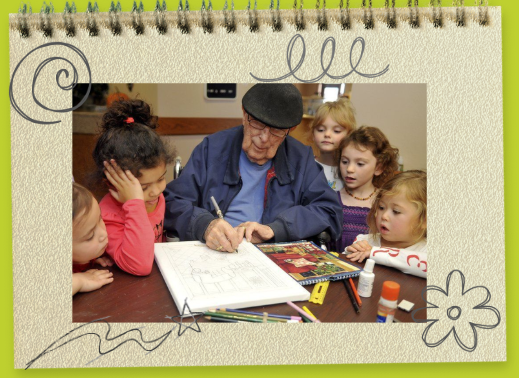
- SHARED AND INTERACTIVE READING: More than just reading, it is a dialogue. Books expose children to decontextualized language (rarer words than in everyday life), greatly enriching their vocabulary. By asking questions about images or characters’ emotions, the adult encourages the child to structure their thinking and anticipate the story.
- SYMBOLIC PLAY (“PRETEND PLAY”): Playing shopkeeper or doctor allows the child to explore different aspects of language. They must adapt their vocabulary to their role, negotiate rules with play partners, and use language to organize imaginary situations, which stimulates pragmatics (the social use of language).
- NURSERY RHYMES AND RHYTHM GAMES: These activities target phonological awareness. Rhymes and songs help children break words into sounds and perceive the melody of language (prosody). This is an essential preparatory step for learning to read.
- LIFE NARRATION AND LABELING: Commenting on daily actions (e.g., naming ingredients while cooking) turns every routine into a language lesson. By precisely naming objects (“the spatula” instead of “that thing”), the adult helps the child’s brain organize words into clear semantic categories, facilitating long-term memory.

FINAL THOUGHT!
Language development is a cognitive transformation in which the brain moves away from its universal sensitivity to sounds to shape its native language. From the instinct of babbling to the complexity of storytelling, each stage represents a victory of intelligence over silence. This journey does not happen alone: it relies on adult support, whose daily interactions provide children with the necessary tools to structure their thinking and ultimately make the world their own.
Créez votre propre site internet avec Webador